











 Sep 2026
 6 min read

A DMC, or destination management company, is a professional services company based in the destination where your event or incentive program takes place. ADMEI, the association for destination management professionals, defines a DMC as “a professional services company located in its destination and specializes in local expertise and resources”. In practice, the DMC is the local team that sources hotels and venues, moves the group, designs the experiences and runs the program on the ground.
Today DMCs come in all shapes and sizes, some focus on activities more closely related to Travel Management for Individual or high net worth travellers while others have built capabilities in creative and production services.
If you have been asked to find “a DMC in Singapore” or “a Bali DMC“, what the letters stand for matters less than which parts of your program the DMC will own and which stay with you or your agency. That split is what this guide is about, written from the side of the table we sit on every week at REALM, as a DMC working with agencies and corporate teams across Asia.
DMC meaning in travel and events
DMC almost always means destination management company. The important word in the ADMEI definition is “located”. A DMC is in the destination, with staff who live there and suppliers it works with every month, rather than a company that flies in for the program. ADMEI goes on to describe the DMC as a strategic partner for local experiences, event management, tours, transport, entertainment and program logistics.
It helps to be clear about what a DMC is not. It is not a travel agency selling flights and holidays, it is not a venue or hotel management company. Those roles sit alongside each other on most international programs, and our guide to DMC vs travel agency sets out who owns what.
What do destination management companies do?
Before anything is booked, a DMC turns a brief into options: which part of the city or island suits the group, which hotels have availability for the dates, what the program could look like day by day, and roughly what it will cost. For an agency, that proposal often becomes part of its own pitch to the client.
Once the program is confirmed, the work moves to contracting. A good DMC knows which properties can take a group of your size, which ones have handled corporate programs well, and what local contract terms look like. It holds space, negotiates and signs, and manages those relationships through to departure.
Then comes movement. Airport meet and greet, transfer fleets, wave arrivals for large groups and getting people between venues and activities sound routine, but in many Asian destinations ground time is the real constraint, and this is where programs succeed or fail.
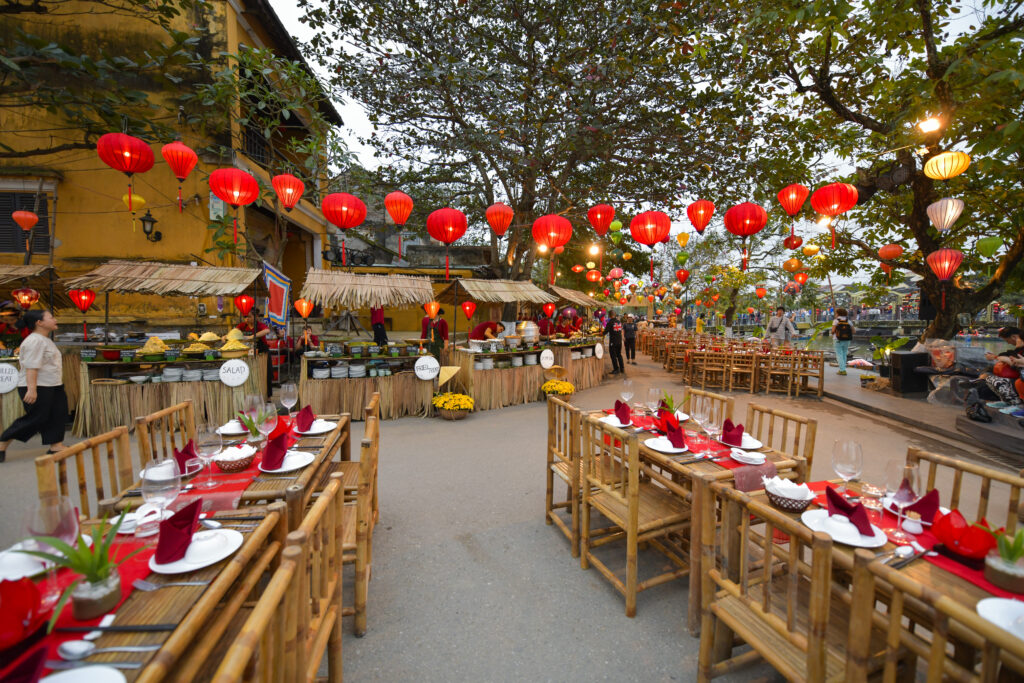
The experiences are what participants remember, and they depend on relationships only a local team keeps up. When we secured a street corner in Hoi An’s old town for an exclusive dinner for 800 delegates, with market-style food stations, live cooking and cultural performances, the evening depended on knowing the town, not just the menu.
Not every DMC produces events in-house. We do: for a global consulting firm we staged an indoor gala for approximately 2,500 guests under a 5,700 sqm air-conditioned tent at Gardens by the Bay in Singapore, as our case study sets out.
Around all of that sits the less visible work:
- permits, venue compliance, safety planning and weather contingencies
- on-site management of suppliers and changes, reporting to the agency or client lead
- final reconciliation against the contracted scope, and a post-program review
Who hires a DMC, and why
Agencies, incentive houses and professional conference organisers are the largest group of buyers. They own the client relationship and design the program, and they need a reliable ground partner in each destination. A global incentive house running programs in many countries a year cannot staff and manage suppliers in all of them, so it partners with a DMC in each market and holds that DMC to its own standards.
Travel management companies are sometimes asked to support an incentive trip or conference for a corporate client. They manage international air and traveller policy, and the in-destination program becomes DMC work. Corporate event and sales-enablement teams that run programs in-house also engage DMCs directly when they have the capability to own the program but no team in the destination; where they also use an agency, the agency usually brings in the DMC.
The reason is the same in every case: the program is happening somewhere the buyer does not have suppliers, language, regulatory knowledge or people on the ground.
How sourcing a DMC works
The sequence is predictable, and knowing it makes the first conversation faster.
- Brief: dates or a window, numbers and waves, participant profile, objectives, budget, must-have moments, sustainability or reporting needs.
- Destination proposal: hotels and venues with availability, experience concepts, a draft program flow and an indicative cost structure.
- Site inspection hosted by the DMC.
- Contracting of hotels, venues and suppliers, usually with the DMC as the local contracting party.
- Operations planning: run of show, transport, room lists, dining and contingency, under one DMC project lead.
- Delivery, reconciliation and review.
When you compare DMCs, the useful questions follow that sequence. Ask who will lead your program and whether they have run one of this size in this destination, which hotels and venues they have contracted recently for similar groups, whether production is in-house or subcontracted, how they report to an agency during the program, and what sustainability or community elements they can actually evidence. A DMC that answers quickly and specifically is usually the one to shortlist.
When a DMC is worth it
A DMC earns its fee when the buyer has no established suppliers or team in the market, when the group is large enough that transport, waves and concurrent activities need local staff, when the program depends on community, venue or authority relationships, or when it crosses borders and needs one accountable partner. For a small meeting in a single international hotel with nothing off-site, a DMC may be more than you need. For anything beyond that, the cost of not having local execution tends to show up on site.
How we work as a DMC in Asia
We are headquartered in Singapore, with local leadership in Singapore, Indonesia, Thailand, Vietnam , Hong Kong, Australia, New Zealand and the Pacific Islands. We are a team with more than three decades of experience delivering events across Asia Pacific. Most international programs reach us through an agency, incentive house, PCO or travel management company that owns the client relationship, and we work as their in-market team, reporting through the partner. Corporate teams running programs in-house work with us the same way.
Clients have described the work in their own words. The event lead of a global consulting firm wrote: “Their attention to detail was amazing, and they provided the necessary level of support to ensure all our needs were met”. Our Singapore HQ is Safe Event certified, and 80% of our staff hold globally recognised industry accreditation.
Talk to us about your Asia Pacific program
If you are an agency sourcing a ground partner in Asia, or a corporate team planning a program in the region, send us the dates, numbers and objectives. We will come back with a destination proposal and a clear view of what we can take on.